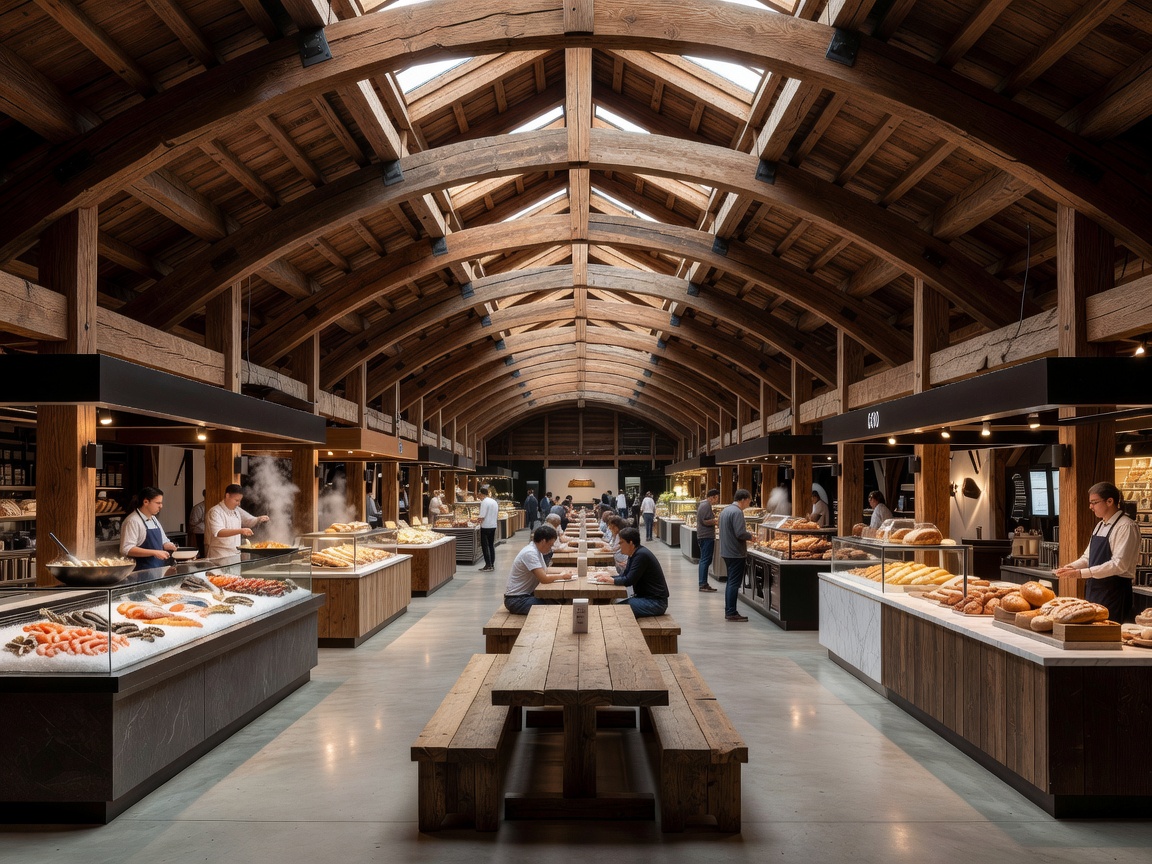
A food hall is a shared dining environment built around multiple food vendors. Customers choose from separate counters, then eat in a common seating area or take their food away. The model combines elements of a market and a casual dining venue, but it does not have one fixed definition.
A market format with a dining center
Traditional markets are often organized around selling ingredients to take home. A food hall usually gives more space to prepared food and eating on site. Some locations combine both: a produce stall may sit near a bakery, a seafood counter and a ready-to-eat lunch vendor. The building might be purpose-designed, adapted from an older commercial space, or arranged as a compact market within a larger district.
Modern halls commonly use a mix of independent operators. Each counter manages its own menu and service, while the shared setting provides tables, circulation and a common public atmosphere. That arrangement makes it possible to order a bowl, sandwich or pastry from different vendors without organizing a conventional multi-course restaurant meal.
Seating systems differ. Some halls use open communal tables. Others mix benches, small tables and standing ledges. A table may be first-come, first-served, or managed by the venue. Check posted rules rather than assuming that a seat can be reserved. At busy periods, a group may need to split up or visit at a quieter time.
The vendor mix sets the character
Bakery counters may focus on rye loaves, sourdough, buns or laminated pastry. Seafood stalls can sell fresh fish, smoked fish or prepared plates. Prepared-food counters may serve soups, sandwiches and hot dishes. Specialist vendors may sell cheese, cured meat, preserves, coffee or seasonal produce. Modern vegetarian kitchens add plant-led meals to the mix.
Not every hall includes every category. A small neighborhood space may have a few food operators and limited seating. A larger destination may combine grocery-style retail with multiple kitchens. The useful measure is not size alone. Look at whether the vendors offer distinct choices, whether the shared space suits your group and whether the format matches your plan.
Regional ingredients can appear in everyday forms: root vegetables in a hot dish, berries in a pastry, local dairy on a bread counter, or fish prepared for a quick meal. The presence of an ingredient does not guarantee that a dish is traditional or locally sourced. Read menu descriptions and ask the vendor when sourcing matters.
Food hall vs traditional market vs food court
| Format | Typical focus | How it differs |
|---|---|---|
| Food hall | Independent food vendors with shared dining | Often balances prepared meals, specialist retail and a common eating area. |
| Traditional market | Ingredient sales and specialist traders | Shopping for food to take home may be central; prepared food varies. |
| Food court | Quick-service outlets around shared seating | Often linked to a larger retail or transport complex; operator mix and market character vary. |
These labels overlap. A market can contain a dining hall, and a food court can host independent local operators. Use the terms as orientation, not as a guarantee about ownership, sourcing, price or atmosphere.
Dine in, take away or combine both
For dine-in, scan the room before ordering. Find the seating area, look for table-use rules and note how orders are collected. Some vendors call a number; others hand over food at the counter. For takeaway, confirm packaging and whether the food travels well. Hot and cold dishes may be sold from different counters, so allow time for more than one queue.
A hall works well when people want different foods or when the group needs a flexible meal. It can be less suitable for a formal, paced dinner. Noise, queues and table availability change by hour. Menus and accessibility arrangements also vary, so check directly with a venue before relying on a specific facility.
Good for
- Groups with different tastes or dietary preferences.
- Sampling several small portions across specialist counters.
- A practical lunch stop near a city center or market district.
- Learning how everyday food retail and prepared meals meet.
What to know
- Seating, table rules and service are venue-specific.
- Separate vendors may use separate ordering and payment systems.
- Ask about ingredients and allergens at the counter.
- Do not assume a market label guarantees local sourcing.
Use the vendor guide to understand counter types, or move to the city guide to compare urban settings.
NEXT / PLAN
Choose a format that fits your day.
Timing, access and dietary needs make the difference.