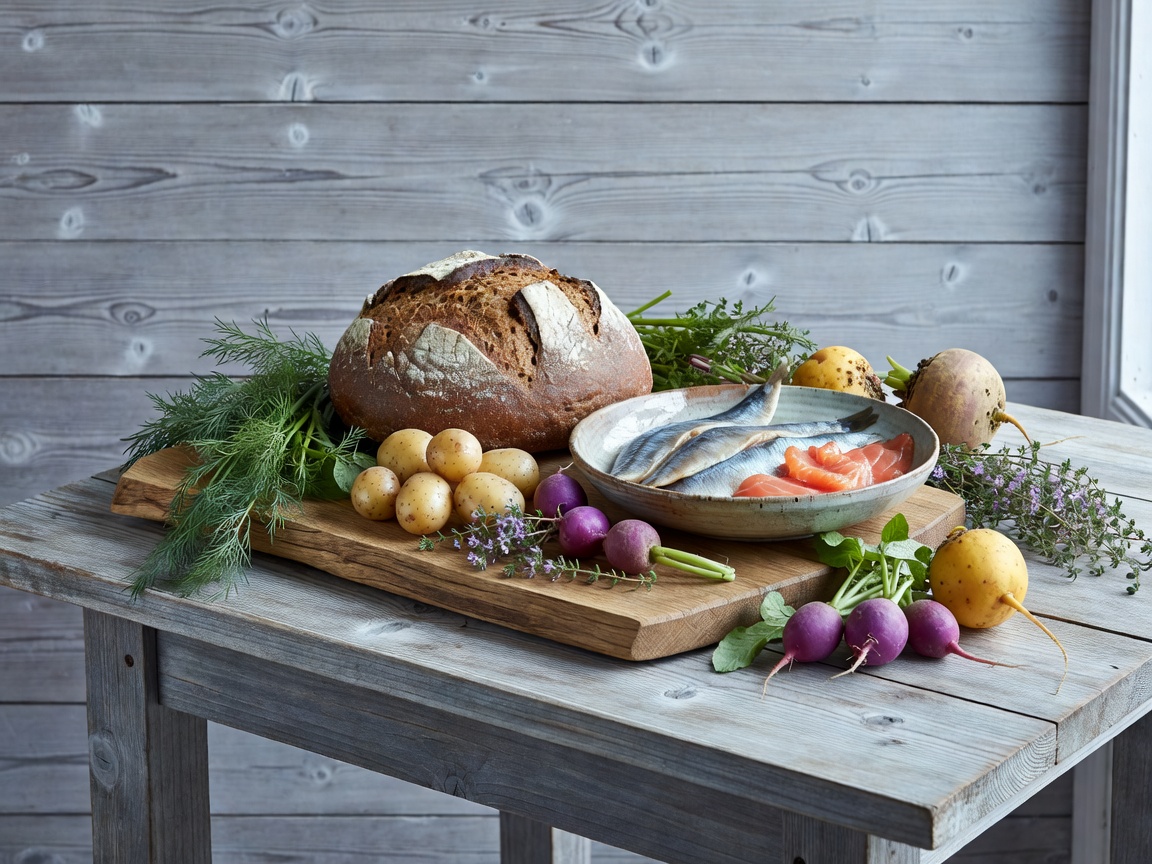
Scandinavian and wider Nordic food traditions overlap across borders and communities. Dishes travel, ingredients cross regions, and modern cooks adapt familiar combinations. A menu description can tell you more than a national label: look for the grain, preparation method, season and accompanying ingredients.
Rye, bread and open-faced sandwiches
Rye is a cereal grain used in breads and other foods. Rye bread can be dense, dark and strongly flavored, though recipes vary. It is often served with toppings or alongside a meal. An open-faced sandwich is a single slice of bread with ingredients arranged on top, rather than a filling enclosed between two slices. The Danish word smørrebrød refers to a well-known form of this style; related open sandwiches appear in broader regional food culture.
In a food hall, an open sandwich may be a full lunch or a smaller item for sharing. Toppings can include fish, meat, cheese, eggs, vegetables or herbs. Ask what is included, especially if a menu uses a broad category such as “seasonal” without listing components. Rye and wheat both contain gluten, and bakery recipes may use additional allergens.
Cinnamon buns are sweet rolls flavored with cinnamon and often cardamom or other spices. Versions appear across Northern Europe, with differences in dough, shape, topping and name. A bun beside coffee can make a short visit; several pastries may also work as a shared tasting order.
Cured fish, smoked fish and preservation
Cured fish has been treated with salt or another curing method to season and preserve it. Smoked fish has been exposed to smoke; hot and cold smoking create different textures and cooking effects. These methods appear in several northern food traditions, but their recipes and histories are not limited to one present-day border.
Gravlax is a Scandinavian-style preparation of salmon cured with salt, sugar and commonly dill. It is usually served without cooking. The precise recipe can differ. A menu may use “cured salmon” for a related preparation, so ask the vendor if the distinction matters. Curing is not the same as cooking, and fish dishes may involve allergens or cross-contact with other seafood.
Preservation is practical as well as culinary. Salting, curing, smoking, drying and fermenting help transform ingredients and develop flavor. A contemporary vendor might use these methods in a small plate, sandwich or prepared dish. Do not assume a preserved food is made on site or follows a historic recipe unless the seller says so.
Root vegetables, berries and dairy
Root vegetables such as potatoes, carrots, parsnips and beetroot are useful in cool-season cooking. They may be roasted, boiled, mashed or used in soups. Their availability and preparation depend on producer, season and supply. A menu that includes root vegetables is not automatically traditional; it may be a modern dish using familiar regional ingredients.
Lingonberries are small red berries with a tart flavor and are often served as a condiment or preserve. Bilberries, cloudberries and other wild or cultivated berries appear in northern food contexts, but availability varies. “Wild” or “local” should be confirmed with the vendor rather than inferred from the name or presentation.
Dairy includes milk, butter, cream and cultured products. Cultured dairy is made through fermentation by microorganisms, which can create a tangy flavor and thicker texture. Cheese styles and dairy practices differ across the region. Check labels for milk, and ask about preparation when a dietary requirement is involved.
Meatballs and familiar hot dishes
Meatballs are seasoned minced meat shaped into small portions and cooked by frying, baking or another method. Versions are found across many cuisines. Scandinavian versions can be served with potatoes, gravy, pickled cucumber or lingonberry preserve, but recipes differ across countries and households. A hall vendor may offer a contemporary variation rather than a fixed traditional formula.
Soups and hot plates often make seasonal vegetables easy to identify. Read the full menu for stock, dairy, meat or fish ingredients. If a dish is described as vegetarian, confirm that the broth and cooking method match your needs.
How food halls reinterpret specialties
Modern food halls bring familiar food forms into a shared, fast-moving setting. A baker may offer a traditional grain in a new shape. A seafood counter may put cured fish on a compact lunch plate. A vegetarian kitchen may pair root vegetables with grains and herbs. These are examples of contemporary combinations, not claims about a particular vendor.
Use ingredient names as clues, not proof of origin. Food traditions cross borders through trade, migration and everyday cooking. When origins are contested or shared, it is more accurate to say so than to assign a dish to one modern country. Vendors can provide practical information about recipes, sourcing and allergens.
Good for
- Decoding menu terms before ordering.
- Finding a small taste of bread, fish, berries or preserved foods.
- Comparing classic ingredients with current kitchen interpretations.
- Choosing a dish based on dietary needs and flavor preferences.
What to know
- Recipes and names vary across countries, regions and families.
- “Nordic,” “local” and “traditional” do not specify a recipe or supply chain.
- Ask about allergens, ingredients and preparation at the point of sale.
- Cured or smoked describes a method, not a guarantee about origin or freshness.
Browse the vendor guide to understand where dishes may appear, or use the planner to build a visit around your needs.
NEXT / VISIT
Plan with the menu in mind.
Allow time to check options, ask questions and choose a route.